
What is EMDR?
Eye Movement Desensitization
and Reprocessing
EMDR is a structured therapy that encourages the patient to focus briefly on the trauma memory while simultaneously experiencing bilateral stimulation (typically eye movements), which is associated with a reduction in the vividness and emotion associated with the trauma memories. Eye Movement Desensitization and Reprocessing (EMDR) therapy is an extensively researched, effective psychotherapy method proven to help people recover from trauma and PTSD symptoms. Ongoing research supports positive clinical outcomes, showing EMDR therapy as a helpful treatment for disorders such as anxiety, depression, OCD, chronic pain, addictions, and other distressing life experiences (Maxfield, 2019). EMDR therapy has even been superior to Prozac in trauma treatment (Van der Kolk et al., 2007). Shapiro and Forrest (2016) share that EMDR therapists in 130 countries have successfully treated millions. (shared from EMDRIA website)
EMDR is a deeply healing form of therapy that is more effective than talk therapy alone.
Bypass the Conscious Mind
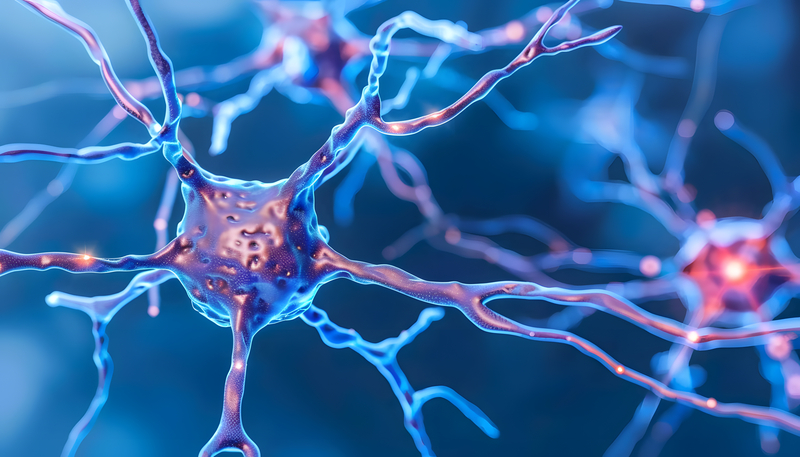
EMDR directly targets the underlying neural networks involved in trauma processing. Through this rewiring process, EMDR can lead to profound shifts in how you perceive and respond to the world around you. Limiting beliefs that once held you back can be deeply replaced with more empowering beliefs. This is not just thinking positive, this is feeling the truth of that new belief in your whole being.
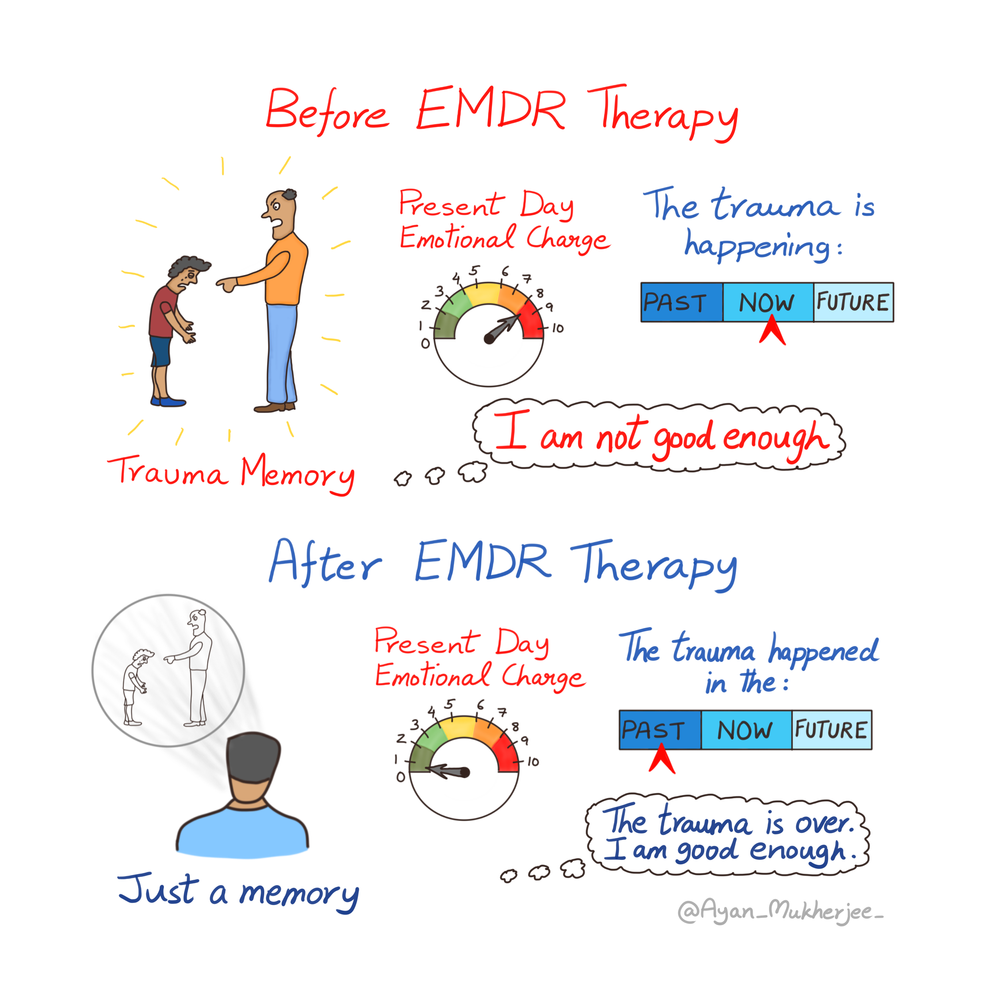
Bottom-up therapy modality
Unlike traditional talk therapies that primarily rely on top-down processing (working through thoughts and emotions consciously and intellectually), EMDR taps into the innate healing capacity of the body and the nervous system.
Reprocessing Phase
Eye movements, sounds or tactile sensations are used to activate both sides of the brain and facilitate processing and integration of traumatic experiences. EMDR allows you to access and release the emotional charge associated with these memories.
Nervous System Transformation
Experience a new sense of stability and regulation. Triggers that used to overwhelm you may lose their power, and your emotional baseline will feel calmer. EMDR can help you cultivate a sense of safety within yourself and in your relationships, allowing for deeper connections and a more fulfilling life.
Who can benefit from EMDR therapy?
Children (4 and up) & adults of all ages who have experienced distressing memories and experiences:
- anxiety, panic attacks and phobias
- chronic illness and medical issues
- depression and bipolar disorders
- grief and loss
- pain
- performance anxiety
- ptsd and other trauma and stress-related issues
- dissociation
- sexual assault
- sleep disturbance
- violence and abuse
- substand abuse and addiction